Executable Human Study Programs with Silicon Participants
Reconstructs a human study from its paper as an executable program that researchers can review, adapt, and run with silicon participants — to understand a published study, prototype a new one, or study agent behavior.
Read the paper · arXiv 2611.11969A study as a program
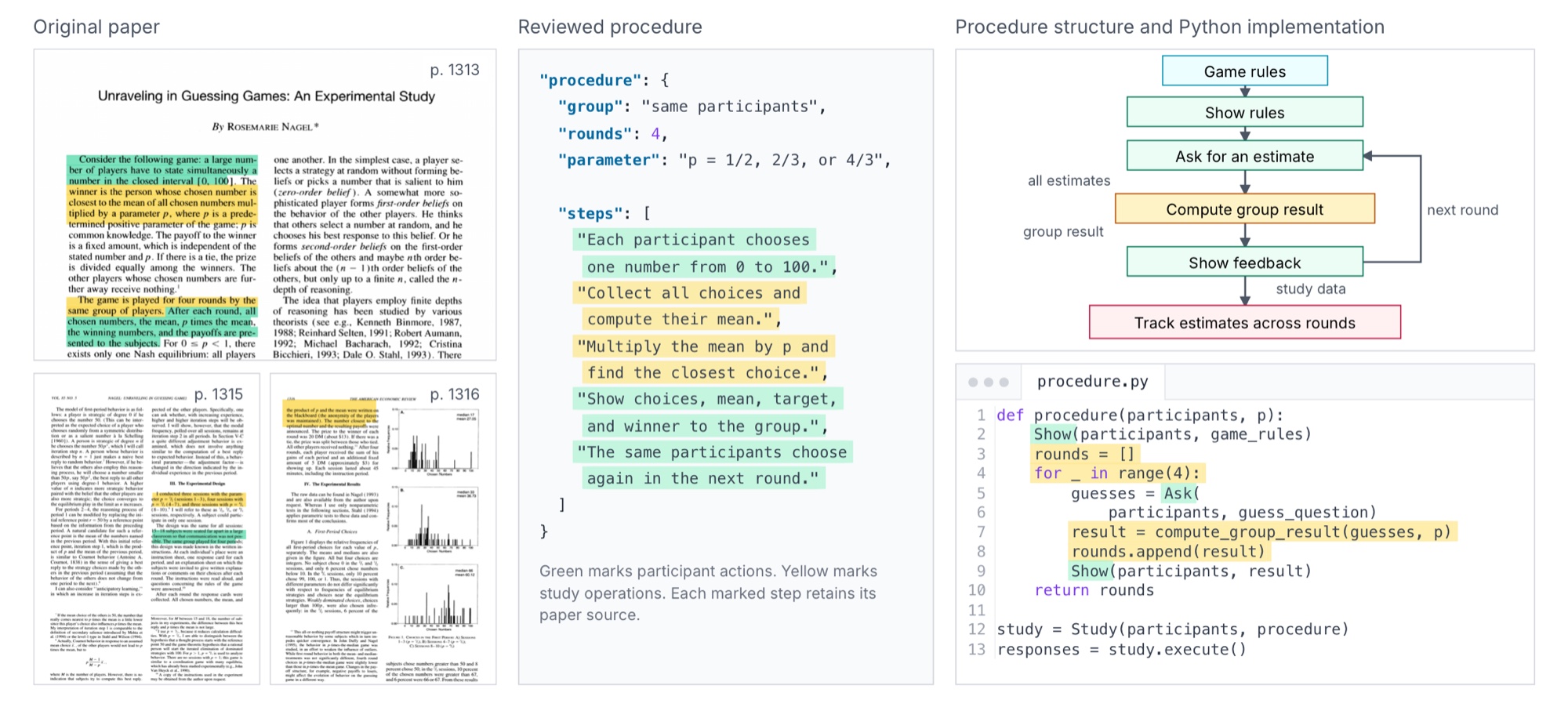
Interviews, surveys, and lab experiments share one structure: they present information, collect responses, and use procedural logic to decide what happens next. HumanStudy Program writes that structure as code. Show presents information to participants, Ask collects their responses, and ordinary Python carries everything in between.
In Nagel's four-round p-Beauty Contest, each participant picks a number from 0 to 100, and whoever is closest to p times the group mean wins. The tool traces each step from the paper to a reviewed procedure, then to the program that runs it.
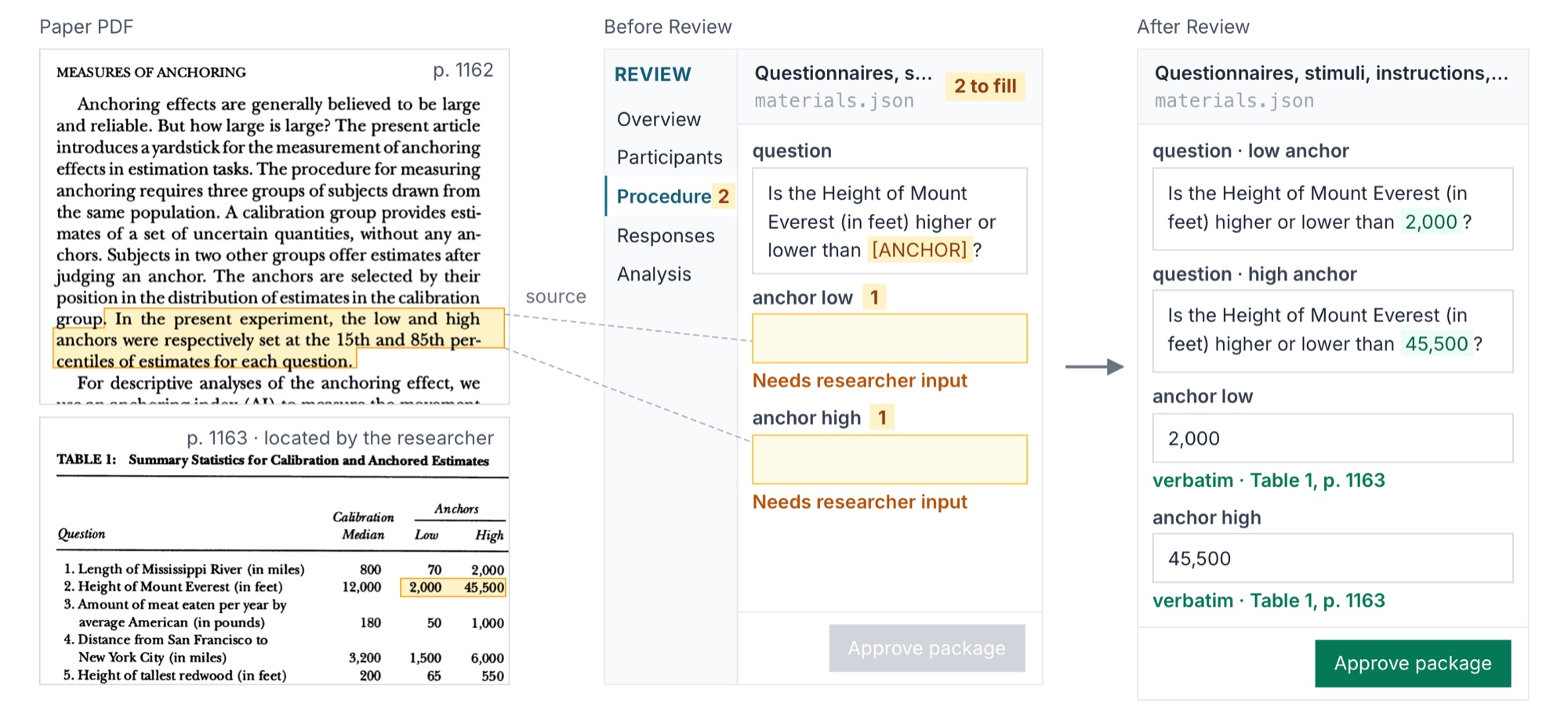
Missing details stay visible
Papers often leave out details a study needs to run. Instead of filling them with plausible defaults, the tool links what it found to its source and flags what it could not read, so the researcher fills the gap before approving the package.
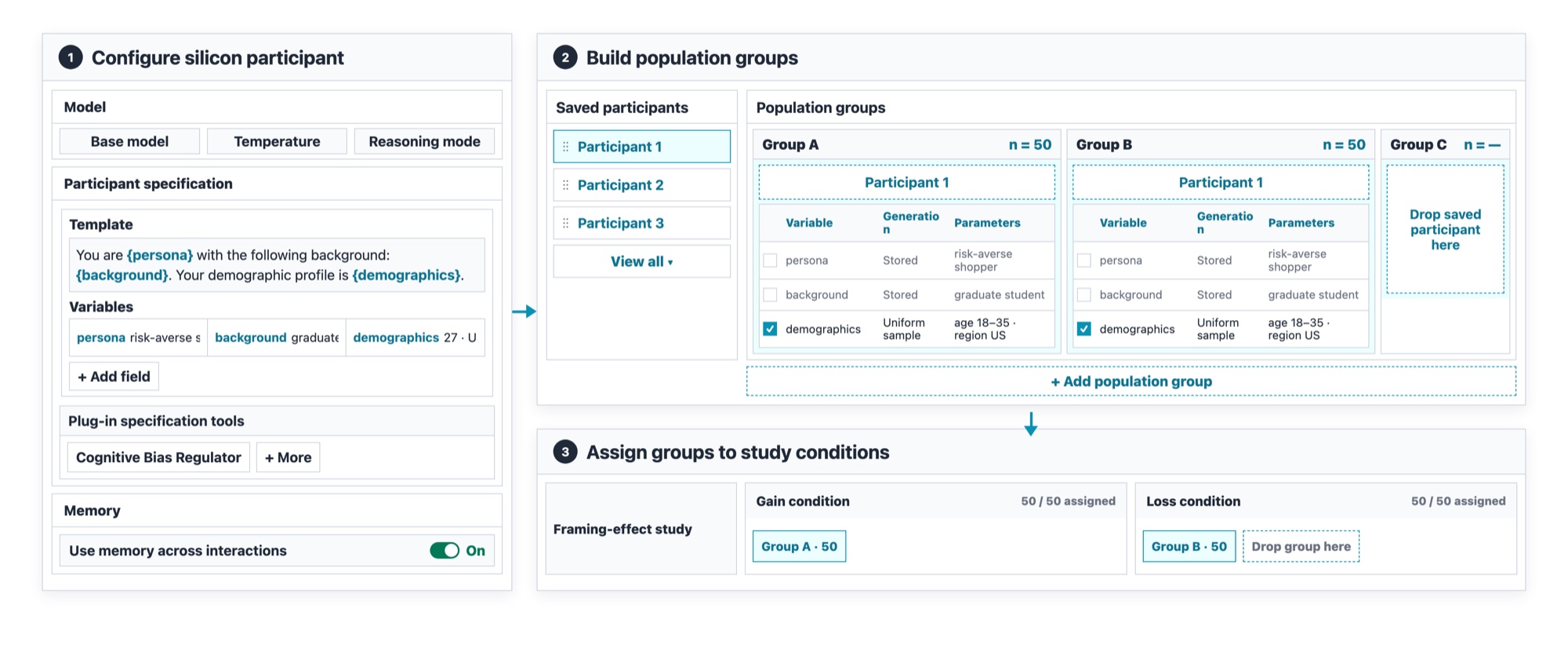
Configure silicon participants
Because the procedure does not depend on how a participant is implemented, researchers can vary the participants while keeping the protocol fixed: choose a model, write a specification, form population groups, and assign them to conditions.
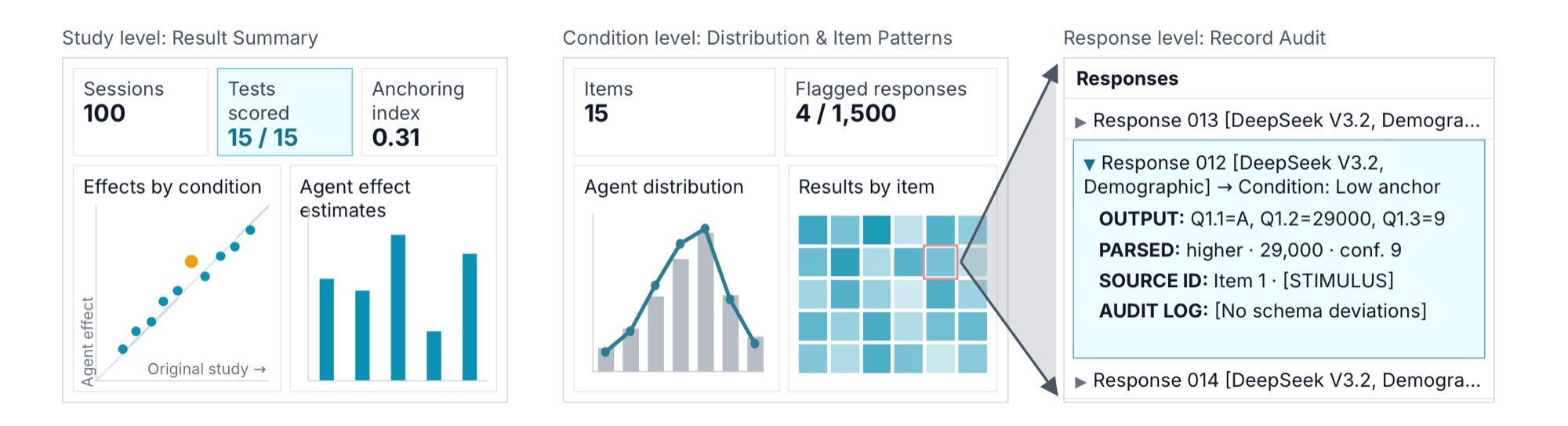
From findings to individual responses
Each run produces structured records. Researchers can start from study-level findings, move to condition-level distributions, and open any single response with its raw output, parsed values, and audit log.
What researchers did with it
In a hands-on review, 12 social science researchers each completed the workflow from paper to results. They saw uses in understanding published protocols, prototyping new studies, and examining AI behavior.